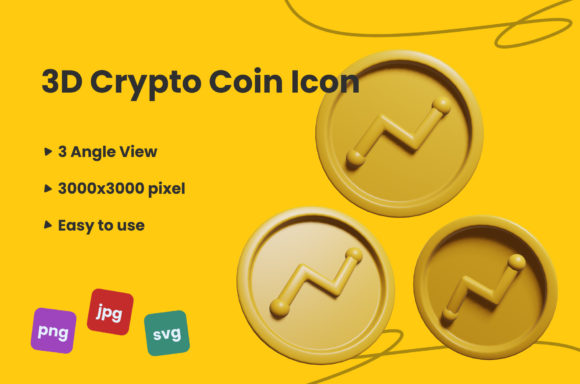
3D Crypto Coin Icon: Design and Application
Visual identity in the crypto space has moved far beyond flat logos and simple gradients. As blockchain projects, NFTs, and Web3 brands compete for attention, the 3D crypto coin icon has emerged as a powerful tool for communicating value, innovation, and trust. These icons are not just decorative—they serve as recognizable symbols for tokens, rewards, gamified assets, and digital communities. Whether you are a designer looking to expand your portfolio, a marketer building a campaign, or an entrepreneur launching a new project, understanding how to create and use a 3D crypto coin icon can elevate your work significantly.
A 3D crypto coin icon is a three-dimensional representation of a coin—often featuring embossed symbols, metallic textures, reflective highlights, and realistic shadows. Unlike flat icons, these designs convey depth and tangibility, making them ideal for hero sections, app icons, token badges, and animated promotional assets. The format appeals to both crypto-native audiences and newcomers alike because it bridges the familiar physicality of traditional coins with the digital nature of blockchain.
Creative Directions and Styles
The beauty of the 3D crypto coin icon lies in its versatility. Depending on your brand’s personality and target audience, you can choose from a wide range of visual styles. Realistic metallic coins with gold, silver, or platinum finishes evoke a sense of established value and seriousness. These work well for institutional projects, investment platforms, or DeFi dashboards. Low-poly geometric coins, with faceted surfaces and sharp edges, give a modern, technical vibe often associated with gaming or metaverse projects. Cartoon or stylized coins with bright colors and softened shading can make a project feel approachable, playful, and community-focused. Abstract or futuristic interpretations—using iridescent materials, neon glows, or wireframe constructions—signal innovation and forward-thinking, perfect for NFT collections or experimental protocols.
Beyond material and geometry, you can also add meaningful details. A coin might include a project’s logo embossed in the center, a unique pattern on the rim, or animated particles orbiting around it. These customizations help the icon stand out in a crowded ecosystem while maintaining brand consistency. For example, a gaming guild might create a coin that glows with a gradient matching its color palette, with faint motion trails to suggest energy and speed. A charity token could incorporate a subtle leaf texture or transparent elements to reflect environmental values.
Practical Applications Across Roles
Different professionals and creators can adapt the 3D crypto coin icon to serve their specific goals. Designers and illustrators use these icons as portfolio pieces that demonstrate technical skill in 3D software (like Blender, Cinema 4D, or Spline). Including a series of coins with different materials, lighting setups, and animations shows versatility and an understanding of both visual appeal and functional constraints like file size or rendering performance.
Marketers and publishers find 3D coin icons invaluable for campaign visuals. A hero image featuring a rotating, glossy coin draws the eye and immediately communicates the subject matter. Blog posts about new token listings can include a rendered coin as a featured image, while social media posts can use short looping animations to increase engagement. For email newsletters, a static but well-lit coin icon can serve as a clickable call-to-action leading to a token sale or signup page.
Entrepreneurs and small business owners launching their own utility token or loyalty program can commission a custom 3D crypto coin icon as part of their brand kit. This icon can appear on the website header, as an app icon, on merchandise like t-shirts or digital stickers, and even in physical form for events. Consistency across touchpoints builds recognition and trust. For example, a local coffee shop creating a "Bean Token" for customer rewards could use a warm copper coin with a coffee bean motif—instantly making the connection clear and memorable.
Educators and hobbyists can use these icons as learning tools or props. Teaching blockchain fundamentals? A set of 3D coin icons representing different layers of a stack (e.g., base layer, protocol, application) can make abstract concepts concrete. Hobbyists creating fan art for their favorite crypto projects also benefit from the icon’s simple yet expressive form, which can be remixed and shared within communities.
Keeping It Clear, Consistent, and Audience-Friendly
While it is tempting to add intricate detail and complex lighting, the most effective 3D crypto coin icons remain clear at small sizes. When used as a logo or app icon, a coin that reads well at 48x48 pixels is far more useful than one that only looks good in a full-screen render. Prioritize silhouette and contrast. Test your design at thumbnail scale—if the symbol in the center becomes muddy, simplify it. Use two or three distinct materials at most, and ensure the lighting highlights the shape without creating confusing shadows.
Consistency with your existing brand identity is critical. If your brand uses a flat, minimalist style everywhere, a hyper-realistic 3D coin might clash. In that case, consider a semi-flat 3D approach: soft shading without harsh reflections, keeping the overall look light and modern. Alternatively, if your brand is bold and futuristic, push the limits with chrome textures and volumetric glows.
Originality also matters. Many crypto projects use generic coin templates available from asset stores. To stand out, invest time in custom geometry or unique materials that reflect your project’s personality. Even a small tweak—like a custom edge pattern or a symbol that is a fusion of two familiar icons—can make your coin instantly recognizable.
Realistic Examples and Practical Inspiration
Here are three scenarios that show how a 3D crypto coin icon can be put into action:
- Portfolio project for a freelance designer: Create a series of five coins representing different blockchain ecosystems—one with a gold finish and a Bitcoin motif, one with a green gradient for Ethereum, one with a blue translucent material for Solana, and so on. Show each coin from multiple angles and include a short turntable animation. This demonstrates technical range and an understanding of the crypto audience.
- Branding for a DeFi lending protocol: The project name is “Anchor”. The coin icon is a silver anchor set within a circular emblem, with a brushed metal texture and subtle ocean-blue reflections. The coin appears on the landing page as a hero element, on platform dashboards as a loading indicator (spinning gently), and on documentation pages as a footer badge. Consistent use builds a strong visual anchor—pun intended—in users’ minds.
- Promotional asset for a token giveaway: A meme coin called “PixelPuff” wants to generate hype. Its 3D coin icon is a cartoon-style pixel art design rendered in 3D: a chubby puffball shape with neon pink and blue colors, floating with a slow bounce animation. The icon is used as a profile picture, in Twitter headers, and as a sticker pack for Telegram. The fun, approachable style matches the community’s tone and encourages sharing.
Practical Recommendations for Getting Started
If you are new to creating 3D crypto coin icons, begin with simple shapes. A cylinder with a beveled edge is the basic form. Add a symbol using Boolean operations or by placing a separate mesh on the surface. Experiment with one material—like shiny gold—and focus on getting the lighting right. Use a three-point light setup (key, fill, rim) to give the coin depth without overwhelming reflections. Once you are comfortable, branch into different materials and more complex symbols.
For those who prefer not to model from scratch, many 3D applications offer base coin templates. Still, customizing textures and lighting is where you will add value. Remember to export your icons in formats suitable for the web: PNG with transparency for static images, or MP4/GIF/WebM for short loops. Optimize file sizes so they load quickly on landing pages.
Even if you do not use 3D software yourself, you can collaborate with a designer by providing clear briefs: describe the intended mood, the key symbol, the primary color, and the platforms where the icon will appear. A well-written brief leads to a more effective outcome.
Ultimately, the 3D crypto coin icon is much more than a trending visual style. It is a adaptable, communicative asset that can unify a brand, engage an audience, and make a project feel tangible in an increasingly digital world. Whether you create them yourself or commission them, thoughtful design will always set your work apart.